Makkah Ziyarat by GMC – Explore the Sacred Places of Makkah
Makkah is the most sacred city in Islam, holding a special place in the hearts of Muslims around the world. Every year, millions of Muslims visit this blessed city to perform Hajj and Umrah, offer prayers, and experience the spiritual beauty of Islam. Along with performing religious duties, many pilgrims wish to explore the historical places connected to the life of Prophet Muhammad (PBUH), the early days of Islam, and important events in Islamic history.
For pilgrims visiting the holy city, exploring these remarkable locations can make their journey even more meaningful. From the mountains associated with important Islamic events to historic mosques and places connected with the Prophet’s life, every location carries a unique story and spiritual lesson.
Makkah ziyarat by GMC offers pilgrims an opportunity to explore important Islamic landmarks while making their visit more organized and comfortable. Whether you’re visiting Makkah for the first time or returning for another Umrah, a well-planned ziyarat experience can help you understand the history of the holy city and make better use of your time.
A ziyarat journey is not simply about visiting different places. It’s about remembering the sacrifices of the early Muslims, learning about the foundations of Islam, and strengthening your connection with your faith.
In this guide, we’ll explore the most important ziyarat places in Makkah, their historical significance, travel preparation tips, and how to plan a comfortable sightseeing experience with GMC.
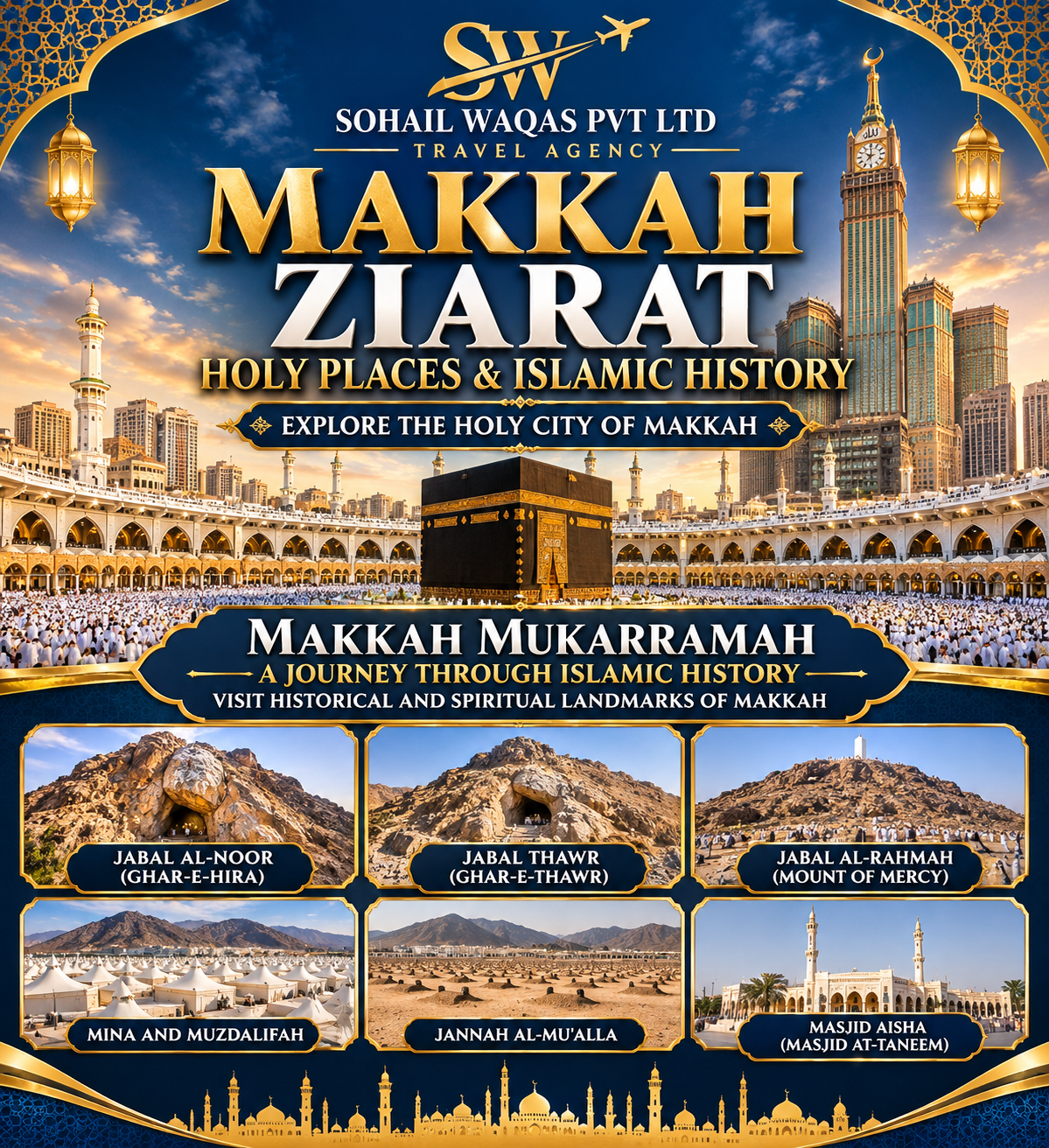
What Is Makkah Ziyarat?
Ziyarat is an Arabic term commonly used for visiting places of religious, historical, or spiritual importance. In Makkah, ziyarat generally refers to visiting locations connected with Islamic history, the life of Prophet Muhammad (PBUH), and important events from the early period of Islam.

Many Umrah pilgrims include ziyarat in their travel plans because it allows them to learn more about the history of the city they are visiting.
Some locations are connected with the beginning of Islamic revelation, while others remind visitors of the hardships faced by Prophet Muhammad (PBUH) and his companions.
During your visit, you may explore:
-
Jabal al-Noor and the Cave of Hira.
-
Jabal Thawr and the Cave of Thawr.
-
Jannat al-Mu’alla Cemetery.
-
Masjid al-Jinn.
-
Masjid al-Taneem.
-
Mina and its surrounding landmarks.
-
Muzdalifah.
-
Mount Arafat.
-
Masjid Nimrah.
-
Other historically significant locations around Makkah.
Each place offers a different perspective on Islamic history. Some locations can be viewed from nearby areas, while others may involve walking or physical activity.
Why Is Makkah Ziyarat Important for Umrah Pilgrims?
Performing Umrah is a deeply personal spiritual experience. Visiting historical Islamic places can add another meaningful dimension to your journey.
When you learn about the events that took place in Makkah, the city becomes more than a destination. You begin to understand the struggles, patience, faith, and sacrifices that shaped the early Muslim community.
Here are some reasons why pilgrims choose to include ziyarat in their travel plans.
1. Learn About Islamic History
Islamic history is closely connected to the streets, mountains, and landmarks of Makkah. Visiting these places helps you understand events that you may have previously read about in books or heard during religious lectures.
For example, Jabal al-Noor is associated with the first revelation received by Prophet Muhammad (PBUH). Seeing the mountain helps visitors appreciate the historical setting of this important event.
2. Strengthen Your Spiritual Connection
Visiting significant Islamic landmarks can encourage reflection and gratitude. It reminds you of the sacrifices made by Prophet Muhammad (PBUH) and his companions to spread the message of Islam.
The experience can inspire you to become more patient, thankful, and committed to your religious responsibilities.
3. Understand the Challenges Faced by Early Muslims
The early Muslim community faced difficult circumstances. Persecution, migration, separation from family, and many other challenges were part of their history.
Places such as Jabal Thawr and the historical areas around Makkah help visitors remember these events and understand the importance of trust in Allah.
4. Make Your Umrah Journey More Meaningful
Many pilgrims spend most of their time performing prayers and religious activities around Masjid al-Haram. This should remain the main focus of their visit.
However, setting aside suitable time for historical sightseeing can also make the overall journey more educational and memorable.
5. Create Lasting Memories
For many Muslims, visiting Makkah is a lifelong dream. Exploring its historical landmarks creates memories that remain special long after returning home.
These experiences can also encourage families to share Islamic history with children and younger generations.
Top Places to Visit During Makkah Ziyarat
Makkah contains several important Islamic landmarks. Each location has its own historical background and significance.
Let’s explore some of the most well-known places that pilgrims may include in their ziyarat itinerary.
1. Jabal al-Noor – The Mountain of Light
Jabal al-Noor is one of the most recognized historical mountains in Makkah. It is famous because the Cave of Hira is located on this mountain.
According to Islamic tradition, Prophet Muhammad (PBUH) received the first revelation of the Holy Quran through Angel Jibreel (AS) in the Cave of Hira.
This event marked the beginning of his prophethood and changed the course of human history.
The mountain holds great historical importance for Muslims. Many visitors wish to see it during their stay in Makkah.
Climbing Jabal al-Noor requires physical effort. The route includes a steep and rocky path, so visitors should carefully consider their fitness and health before attempting the climb.
What makes Jabal al-Noor special?
-
It is associated with the first revelation.
-
It contains the historic Cave of Hira.
-
It reminds Muslims of the beginning of prophethood.
-
It offers an opportunity to reflect on the early history of Islam.
You don’t have to climb the mountain to appreciate its historical importance. Viewing it from a suitable nearby location can also be meaningful.
2. Jabal Thawr – The Mountain of the Cave of Thawr
Jabal Thawr is another important historical landmark in Makkah.
The mountain is famous for the Cave of Thawr, where Prophet Muhammad (PBUH) and Abu Bakr (RA) stayed during their migration from Makkah to Madinah.
This event is connected with the Hijrah, one of the most important events in Islamic history.
During their journey, they sought shelter in the cave while their pursuers searched for them. The incident is remembered as an example of trust in Allah, courage, and companionship.
The story of Jabal Thawr teaches an important lesson: even during the most difficult circumstances, a believer should maintain faith and place trust in Allah.
Historical significance of Jabal Thawr:
-
Associated with the migration to Madinah.
-
Connected with the companionship of Prophet Muhammad (PBUH) and Abu Bakr (RA).
-
Represents patience, courage, and reliance on Allah.
-
Provides insight into an important chapter of Islamic history.
The climb to the cave is physically demanding. Elderly pilgrims and people with mobility difficulties should avoid attempting it unless they have received appropriate guidance.
3. Jannat al-Mu’alla – The Historic Cemetery of Makkah
Jannat al-Mu’alla is one of the most historically significant cemeteries in Makkah.
It is associated with several important personalities from early Islamic history, including members of the Prophet’s family.
Among those traditionally associated with this cemetery are Khadijah bint Khuwaylid (RA), the beloved wife of Prophet Muhammad (PBUH), and other individuals from the early Muslim community.
Visiting this historic cemetery reminds Muslims of the temporary nature of worldly life and the importance of preparing for the Hereafter.
Visitors should maintain respect, follow local regulations, and observe appropriate Islamic manners.
Why visit Jannat al-Mu’alla?
-
To learn about the early Muslim community.
-
To remember important personalities from Islamic history.
-
To reflect on life, death, and the Hereafter.
-
To understand the historical heritage of Makkah.
4. Masjid al-Jinn – A Historic Mosque in Makkah
Masjid al-Jinn is another well-known Islamic landmark.
It is associated with the account of a group of jinn listening to the recitation of the Holy Quran and responding to its message.
The incident is mentioned in the Holy Quran, particularly in Surah Al-Jinn.
The mosque is an important location for visitors interested in learning about the different events described in Islamic teachings.
Its historical and religious associations make it a popular stop during sightseeing around Makkah.
When visiting, remember that the main purpose of ziyarat is to learn, reflect, and appreciate Islamic history rather than treating these places as destinations for unusual rituals.
5. Masjid al-Taneem – A Place for Entering Ihram
Masjid al-Taneem is one of the important mosques located outside the Haram boundary of Makkah.
It is commonly known as Masjid Aisha because Aisha (RA), the wife of Prophet Muhammad (PBUH), entered Ihram for Umrah from this area following the Prophet’s instructions.
Many pilgrims visit this mosque when they intend to perform an additional Umrah during their stay in Makkah.
The mosque provides facilities for worshippers and those preparing for Ihram.
Important things to know:
-
It is located outside the Haram boundary.
-
It is associated with Aisha (RA).
-
Pilgrims commonly use it as a place to enter Ihram for another Umrah.
-
Visitors should understand the relevant Ihram requirements before beginning their journey.
If you’re planning another Umrah, ask a qualified religious guide about the correct procedure and your individual circumstances.
6. Mina – The Historic Area of Hajj
Mina is a significant location associated with the annual pilgrimage of Hajj.
It is situated within the greater Makkah region and is known for its large accommodation facilities used by Hajj pilgrims.
During Hajj, millions of Muslims gather in Mina to perform important rituals according to the prescribed schedule.
The area is particularly associated with the symbolic stoning of the Jamarat, which represents rejection of evil and obedience to Allah.
Mina is also connected with the broader story of Prophet Ibrahim (AS), his family, and the traditions of Hajj.
Visiting the area outside the Hajj season can help pilgrims understand the geographical setting of these important religious activities.
7. Muzdalifah – A Significant Place During Hajj
Muzdalifah is located between Arafat and Mina and plays an essential role in the Hajj pilgrimage.
During Hajj, pilgrims travel to Muzdalifah after standing at Arafat. They spend the night there and perform prayers according to the established Hajj rituals.
The area is also associated with collecting small stones for the stoning ritual at Jamarat.
Muzdalifah reminds Muslims of unity, simplicity, patience, and obedience to Allah.
For visitors exploring the historical and geographical surroundings of Makkah, seeing Muzdalifah can provide a better understanding of the Hajj journey.
8. Mount Arafat – The Place of Standing During Hajj
Mount Arafat, also known as Jabal al-Rahmah, is one of the most significant locations associated with Hajj.
The plain of Arafat is where pilgrims gather on the ninth day of Dhul Hijjah to perform Wuquf, the standing at Arafat.
This is considered the central pillar of Hajj.
The day is dedicated to prayer, supplication, remembrance of Allah, and seeking forgiveness.
Muslims around the world recognize the importance of Arafat because of its central place in the Hajj pilgrimage.
Many visitors also associate this location with lessons about equality, repentance, and the mercy of Allah.
9. Masjid Nimrah – A Historic Mosque at Arafat
Masjid Nimrah is a well-known mosque situated in the Arafat area.
It is closely associated with the Hajj pilgrimage and the sermon delivered by Prophet Muhammad (PBUH) during his Farewell Hajj.
The Farewell Sermon contains important teachings about justice, equality, human rights, family responsibilities, and the importance of following Islamic principles.
The mosque is a significant landmark for Muslims interested in the history of Hajj.
Visitors should remember that access arrangements and prayer facilities can vary depending on the season and local regulations.
What Makes GMC a Useful Choice for Makkah Ziyarat?
Planning a sightseeing journey in a city that you’re visiting for the first time can sometimes feel confusing.
You may not know the distance between different locations, the best order for visiting them, or how much time to allow for each stop.
Transport planning becomes even more important when you’re travelling with family members, elderly pilgrims, or children.
Makkah ziyarat by GMC can be considered when arranging a more organized sightseeing experience around the holy city.
A planned journey helps you focus on the historical importance of each location instead of worrying about every travel detail.
Here are some aspects to consider when arranging your ziyarat through GMC.
1. Organized Sightseeing
A planned itinerary can help you visit important landmarks in a logical order.
Instead of deciding where to go at every stage, you can discuss your preferred destinations before starting the journey.
This makes the experience easier to manage, particularly when you have limited time in Makkah.
2. Convenient Transportation
Transportation is an important part of any sightseeing experience.
A suitable vehicle arrangement can help reduce the effort involved in moving between different locations.
This is especially useful for families and groups who prefer travelling together.
Before confirming your arrangement, discuss the vehicle type, passenger capacity, pickup point, and other requirements with the GMC team.
3. Better Time Management
Many Umrah pilgrims have busy schedules. They need time for prayers, rest, meals, and other religious activities.
A planned sightseeing schedule helps you organize your day without unnecessarily disturbing your worship routine.
You can discuss the expected duration and destinations in advance.
4. Suitable for Families and Groups
Travelling with family members requires additional planning.
Children may need breaks, while older family members may prefer shorter walking distances and convenient stops.
A properly discussed itinerary helps you identify suitable locations and avoid unnecessary physical strain.
5. More Focus on the Spiritual Experience
When transport and sightseeing arrangements are planned in advance, you can give more attention to the historical and religious significance of the places you visit.
You can spend your time reflecting on Islamic history instead of making last-minute travel decisions.
How to Plan Your Makkah Ziyarat Step by Step
A little preparation can make your sightseeing experience much smoother.
Whether you’re travelling alone, with friends, or with your family, the following steps can help you organize your visit.
Step 1: Decide Which Places You Want to Visit
Start by making a list of the historical landmarks that interest you most.
If you have limited time, prioritize the locations that are important to your travel plans.
For example, you may wish to include:
-
Jabal al-Noor.
-
Jabal Thawr.
-
Jannat al-Mu’alla.
-
Masjid al-Jinn.
-
Masjid al-Taneem.
-
Mina.
-
Muzdalifah.
-
Arafat.
-
Masjid Nimrah.
Discuss your preferred stops with the GMC team before finalizing the itinerary.
Step 2: Choose a Suitable Day and Time
Consider your daily Umrah routine before selecting a sightseeing day.
Early planning can help you avoid conflicts with prayer times and other religious activities.
You should also consider the weather, particularly during warmer months.
If you’re travelling with elderly family members, choose a schedule that allows enough time for rest.
Step 3: Discuss Transportation Arrangements
Contact GMC to discuss your transportation requirements.
Share the number of passengers, pickup location, preferred destinations, and any special needs.
Ask about the available vehicle arrangements and whether the proposed itinerary can accommodate your group comfortably.
Step 4: Prepare for the Journey
Before leaving your hotel, make sure everyone is ready.
Carry essential items such as:
-
Drinking water.
-
Comfortable footwear.
-
A mobile phone.
-
Identification documents.
-
Sun protection.
-
Necessary personal medicines.
-
A small bag for personal belongings.
Keep your belongings organized so that you can enjoy the journey without unnecessary interruptions.
Step 5: Learn About the Historical Places
A ziyarat visit becomes more meaningful when you understand the background of each location.
You can read about these places before your journey or listen to reliable Islamic historical explanations.
If you have questions about religious practices, consult a knowledgeable scholar rather than relying on unverified information.
Step 6: Follow Local Rules and Instructions
Saudi Arabia has specific regulations for visitors at important religious and historical locations.
Always follow official instructions regarding access, parking, walking routes, photography, and restricted areas.
Some locations may have limited access during Hajj or other busy periods.
Respecting these rules helps ensure a smooth experience for everyone.
Best Time to Visit Historical Places in Makkah
The timing of your ziyarat journey can influence your overall experience.
Makkah has a hot desert climate, and temperatures can become particularly high during certain months.
For this reason, it’s useful to consider weather conditions when planning outdoor sightseeing.
Morning Visits
Morning hours can be suitable for visiting outdoor landmarks because temperatures are often more manageable than later in the day.
Starting earlier may also help you organize multiple stops without feeling rushed.
Afternoon Visits
Afternoon sightseeing may be suitable for selected locations, depending on the season and weather.
However, during hotter periods, outdoor activities can become uncomfortable.
If you’re travelling with children or older family members, consider limiting outdoor exposure.
Evening Visits
Some landmarks may be viewed from suitable public areas during evening hours.
However, access to specific sites can vary. Always check local arrangements before planning an evening visit.
Consider the Hajj Season
The Hajj period is an exceptionally busy time in Makkah and its surrounding areas.
Road access, traffic arrangements, and visitor movement may be restricted around important pilgrimage locations.
If you’re visiting during this period, follow official instructions and confirm the availability of your planned sightseeing arrangements in advance.
Makkah Ziyarat with Family: Helpful Tips
Travelling with family can make your Umrah journey more memorable, but it also requires thoughtful planning.
Different family members may have different needs. Children may become tired quickly, while elderly relatives may need additional time and assistance.
Here are some practical suggestions.
Keep the Itinerary Comfortable
Avoid trying to visit every landmark in a single journey.
Choose the locations that matter most to your family and allow enough time between stops.
A relaxed itinerary is usually more enjoyable than a rushed sightseeing schedule.
Consider Elderly Family Members
Some historical locations involve steep paths, uneven surfaces, or long walking distances.
Jabal al-Noor and Jabal Thawr, in particular, require considerable physical effort if you intend to climb them.
Elderly visitors should consider viewing these landmarks from suitable nearby areas instead of attempting difficult climbs.
Keep Children Comfortable
Children may not fully understand the historical importance of each location, but you can make the experience educational.
Explain simple stories about Prophet Ibrahim (AS), Prophet Muhammad (PBUH), and the early Muslims.
Keep water available and take breaks whenever needed.
Stay Together
If you’re travelling as a group, agree on meeting points and make sure everyone knows the transportation arrangements.
Keep important contact information available in case someone becomes separated from the group.
Common Mistakes to Avoid During Makkah Ziyarat
Even a well-planned journey can become stressful if certain mistakes are overlooked.
Knowing what to avoid can help you enjoy your visit more comfortably.
1. Trying to Visit Too Many Places
One common mistake is attempting to cover every historical location in a very short time.
This can make the journey tiring and reduce the time available to understand each place.
Choose your destinations according to your available time and physical comfort.
2. Ignoring Weather Conditions
Makkah can experience extreme heat, especially during summer.
Spending long periods outdoors without proper preparation can lead to exhaustion.
Check the weather and carry sufficient drinking water.
3. Attempting Difficult Mountain Climbs Without Preparation
Jabal al-Noor and Jabal Thawr are historically important, but climbing them requires physical fitness.
Don’t assume that every visitor needs to reach the caves to experience their historical significance.
Your safety and well-being should always come first.
4. Not Confirming the Itinerary
Assuming that every destination will be included can create confusion.
Discuss your preferred locations, pickup arrangements, and expected duration with GMC before departure.
5. Ignoring Prayer Times
Your sightseeing schedule should never unnecessarily interfere with your religious responsibilities.
Plan your visit around prayer times and leave enough room for worship.
6. Following Unverified Religious Information
Not every story shared at a historical location is supported by reliable Islamic sources.
Listen to knowledgeable people and verify religious information through trusted scholars and authentic references.
7. Forgetting Essential Belongings
Leaving your phone, identification, water, or necessary personal items behind can create avoidable problems.
Prepare your belongings before leaving your accommodation.
Important Travel and Religious Etiquette During Ziyarat
Makkah is a sacred city, and visitors should maintain respectful behaviour throughout their journey.
Ziyarat is an opportunity to learn and reflect. It should be approached with humility and respect.
Keep the following guidelines in mind:
-
Maintain appropriate Islamic manners at religious locations.
-
Respect cemeteries and avoid inappropriate behaviour.
-
Follow the instructions of local authorities.
-
Avoid disturbing people who are praying.
-
Do not damage historical sites.
-
Keep public areas clean.
-
Avoid blocking roads and pedestrian pathways.
-
Follow photography restrictions where applicable.
-
Do not perform religious acts without authentic Islamic guidance.
-
Respect the privacy of other visitors.
Remember that the purpose of visiting historical places is to appreciate Islamic history and take valuable lessons from it.
Makkah Ziyarat by GMC for International Umrah Pilgrims
Makkah welcomes Muslims from Pakistan, India, Bangladesh, Indonesia, Malaysia, the United Kingdom, and many other countries.
For international pilgrims, exploring the city can sometimes be challenging because of unfamiliar roads, language differences, and local transportation arrangements.
Planning ahead can make the experience easier.
Pakistani Umrah pilgrims, in particular, often travel with family groups and elderly relatives. They may prefer discussing their travel requirements in Urdu before finalizing their sightseeing plans.
GMC provides a point of contact for pilgrims who want to discuss their ziyarat arrangements.
Before your visit, you can communicate your requirements, ask about suitable destinations, and confirm the details of your proposed journey.
Whether you’re visiting for the first time or have already performed Umrah several times, learning about Makkah’s history can make every visit special.
How to Make Your Ziyarat Experience More Meaningful
Visiting historical places is more rewarding when you prepare yourself spiritually and educationally.
Rather than simply taking photographs and moving to the next destination, spend a little time understanding the story behind each landmark.
Here are some ways to make your experience more meaningful.
Read about Islamic history before your visit.
Learning about the migration to Madinah, the first revelation, and the early Muslim community will help you understand the importance of the locations.
Listen to authentic historical explanations.
Use reliable Islamic books, lectures, and scholarly resources to learn about important events.
Take time to reflect.
Consider the lessons of patience, sacrifice, honesty, courage, and trust in Allah.
Travel with a positive intention.
Approach the journey with humility and respect. Remember that visiting a historical place is different from performing an act of worship.
Share what you learn.
After returning home, share authentic historical information with your family and friends. This can help younger generations develop a better understanding of Islamic history.
Makkah Ziyarat by GMC – A Convenient Way to Explore Islamic Heritage
When planning your sightseeing experience, having a clear itinerary and suitable transportation arrangements can make a noticeable difference.
Makkah ziyarat by GMC gives pilgrims a convenient point of contact for discussing their travel needs and exploring important historical locations around the holy city.
Every pilgrim has different requirements. Some may want to visit the most famous Islamic landmarks, while others may prefer a shorter journey because of limited time or physical limitations.
Families may need a different arrangement from individual travellers or larger groups.
That’s why discussing your requirements before the journey is a sensible step.
You can contact GMC to discuss:
-
Your preferred ziyarat destinations.
-
Your pickup and drop-off requirements.
-
The number of passengers travelling.
-
Suitable transportation arrangements.
-
Your preferred travel schedule.
-
Any special requirements for elderly family members.
Clear communication helps you understand the arrangements before beginning your journey.
The aim is to enjoy a comfortable sightseeing experience while giving proper attention to the spiritual importance of Makkah.
Frequently Asked Questions About Makkah Ziyarat
Pilgrims often have questions about historical places, sightseeing arrangements, and the best way to organize their visit.
Here are answers to some common questions.
https://www.haramainrenter.com/makkah-ziyarat-by-gmc-explore-sacred-islamic-sites/
4. FAQ Section
1. What are the most important places to visit during Makkah ziyarat?
Some well-known places include Jabal al-Noor, Jabal Thawr, Jannat al-Mu’alla, Masjid al-Jinn, Masjid al-Taneem, Mina, Muzdalifah, Arafat, and Masjid Nimrah. Each location has its own historical significance.
2. How long does a Makkah ziyarat tour take?
The duration depends on the number of destinations, traffic conditions, walking requirements, and your preferred schedule. Discuss your itinerary with GMC to plan a suitable sightseeing journey.
3. Can elderly people participate in Makkah ziyarat?
Yes. Elderly pilgrims can visit suitable historical locations, depending on their mobility and health. However, climbing Jabal al-Noor or Jabal Thawr may be physically demanding. Viewing these mountains from nearby areas can be a more comfortable alternative.
4. Is Makkah ziyarat suitable for families with children?
Yes. Families can explore important Islamic historical landmarks together. Parents should plan suitable breaks, carry drinking water, and choose locations that are comfortable for children.
5. Can I visit Masjid al-Taneem for another Umrah?
Masjid al-Taneem is commonly used by pilgrims who intend to enter Ihram for another Umrah. However, you should understand the relevant Islamic rulings and procedures according to your circumstances before proceeding.
6. How can I arrange Makkah ziyarat with GMC?
You can contact M.Waqas Siddique or M.Sohail Siddique using the contact numbers provided below. Discuss your preferred destinations, travel requirements, passenger details, and schedule to understand the available arrangements.
5. Contact Details
Contact GMC for Your Makkah Ziyarat Arrangements
Planning to explore the historical and sacred landmarks of Makkah? Get in touch with GMC to discuss your sightseeing requirements and arrange your visit according to your travel plans.
Our contact persons can help you discuss your preferred destinations and transportation requirements.
M. Waqas Siddique
Contact Number: +92 303 5655552
M. Sohail Siddique
Contact Number: +92 334 2777123
Plan Your Spiritual Journey Today
Make your visit to Makkah more informative and memorable by exploring the important places connected with Islamic history.
Contact GMC today to discuss your Makkah ziyarat requirements and plan a comfortable journey around the holy city.
May Allah accept your Umrah, bless your journey, and grant you the opportunity to visit the blessed places of Makkah with peace, comfort, and sincerity. Ameen.